Reporting is a cornerstone of trust for mission-led organisations. Whether it’s an annual report or a dedicated impact report, it’s how you show the world what you’ve achieved and where you’re headed next.
The days of glossy printed reports are mostly behind us. PDFs swiftly became the default: easier to share, cheaper to produce, and kinder to the planet. But here’s the thing – a PDF is still designed for the page, not the screen. Sharing a PDF online means delivering an offline format on a digital platform – and that compromises the experience.

I’m not saying print is dead, or that digital is always the answer. But if your audience is reading online, why not design your report for online? A website or microsite is built for the way people actually engage with content today: readable on any device, easy to navigate, and optimised for the screen.
More organisations are starting to wake up to this, choosing to design dedicated digital reports that open up new possibilities for connection, clarity, and impact.
In short: if you want your impact to reach further, it’s time to go digital.
Why digital makes sense

Usability and accessibility
When a report is designed to be read online, it creates a smoother, more intuitive experience, whatever device someone’s using. PDFs can be awkward to navigate or tricky to read on mobile, while digital reports adjust to screen size, keep text legible, and can be made accessible for users of all abilities.
 Engagement and interaction
Digital reports turn readers into participants. Instead of the report being read, it’s explored. Interactive features like video, infographics, and clickable data bring your achievements to life.
 Data and updates
Printed and PDF reports are out of date as soon as they’re published. With a digital report, you can update stats or add new stories at any time – and fix those inevitable typos! Your report becomes a living resource, not just a yearly snapshot.
 Sustainability
When it comes to sustainability, digital is a no-brainer. No paper, no ink, no shipping. It’s a lower-carbon choice that demonstrates your commitment to change. And by partnering with organisations like Digital Carbon Online, you can even measure, report, and reduce the site’s carbon footprint – making a positive impact on scope 3 emissions targets.
 Analytics and insights
With a PDF, you’re left wondering if anyone read it. A digital report gives you real data: how many people visited, which sections they explored, and what resonated. These insights help you refine your message and inform next year’s strategy.
 Cost efficiency and future-proofing
The designing, printing, and shipping of reports adds up. Going digital can be more cost-effective, especially over time. Take a template-driven approach – invest in the design and build in year one, and repurpose it time and again.
Digital reporting in action
SAI Platform Annual Report
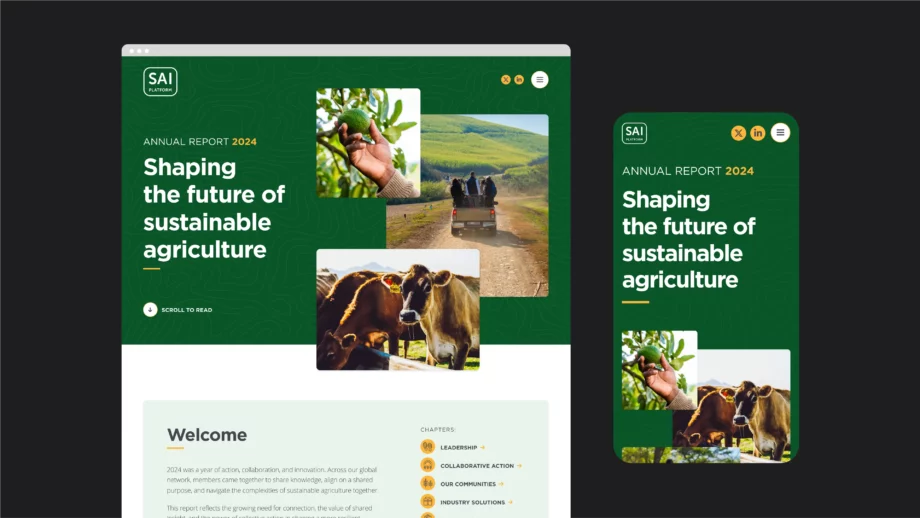
SAI Platform’s online annual report is a great example of what’s possible when you go digital. We partnered with SAI Platform – a global network driving sustainable agriculture – to transform their printed annual report into an engaging, accessible microsite.
This shift to digital reporting has already increased engagement, by making it easier to explore, share, and connect with our work.
– Brigid Norde-McAleer, Communications Director
With three digital reports now published, the flexible template is proving an effective platform. Read our case study here.
Made for the World Impact Report
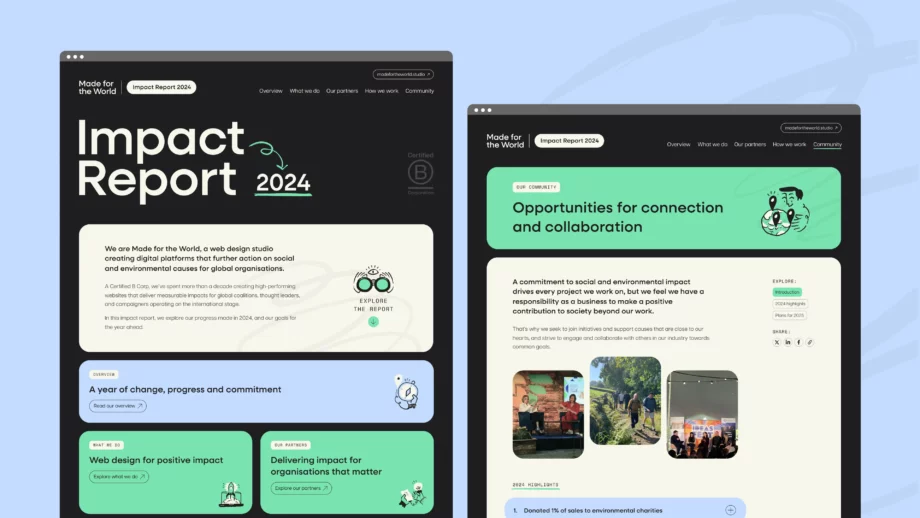
As a digital agency, we believe in practising what we preach. That’s why we published our first Impact Report as a dedicated microsite – documenting our progress, goals, and impact in a low-carbon format.
Explore more digital reports
Ready to take your report online?
If you want your report to reach further and work harder for your mission, let’s talk. Get in touch to discuss how your next report could become a living, breathing online experience.